The counterfeit fashion market is larger than most retailers and consumers realize. Estimates from the OECD and European customs authorities consistently place the annual value of counterfeit clothing and footwear in the hundreds of billions of dollars globally, with Europe representing a significant portion of both the entry point and end market for fake goods.
For retailers and boutique buyers, the risk is not just reputational. Selling counterfeit goods – even unknowingly – carries legal consequences across EU member states, including product seizure, significant fines, and in persistent cases, criminal liability. Understanding how to identify authentic products and how to ensure your sourcing channels are protected from counterfeit exposure is a material business risk management question.
Why Counterfeit Product Enters the Wholesale Channel
Counterfeit fashion goods don’t primarily enter the market through obvious channels. Most retailers who end up stocking fake product don’t go looking for it – they purchase from what appears to be a legitimate wholesale source at an attractive price, and discover the problem only when customers or staff notice quality inconsistencies, or worse, when goods are flagged by brand enforcement teams or customs.
The routes through which counterfeit product enters the legitimate wholesale ecosystem include:
Unverified B2B marketplaces and open directories. Platforms with minimal or no buyer and seller verification allow counterfeit producers to list products alongside legitimate surplus. Without a vetting process, there is no structural check on what enters the marketplace.
Informal trader networks. Stock obtained through personal introductions or trade connections without formal business verification is higher risk. The informality that makes these channels feel flexible also removes the accountability structures that legitimate businesses rely on.
Too-good-to-be-true pricing on current-season products. Genuine surplus from major brands does exist at significant discounts – but it follows predictable patterns. Heavily discounted current-season product from premium brands through informal channels, particularly when the supplier cannot demonstrate legitimate chain of custody, is a red flag.
Mislabeled or reclassified goods. Some sophisticated counterfeit operations produce goods that closely mimic authentic products at a visual level, with only technical inspection revealing differences in materials, construction, or labeling compliance.
How to Authenticate Branded Fashion Products
Experienced buyers and quality control professionals use a combination of approaches to authenticate branded fashion goods before accepting delivery.
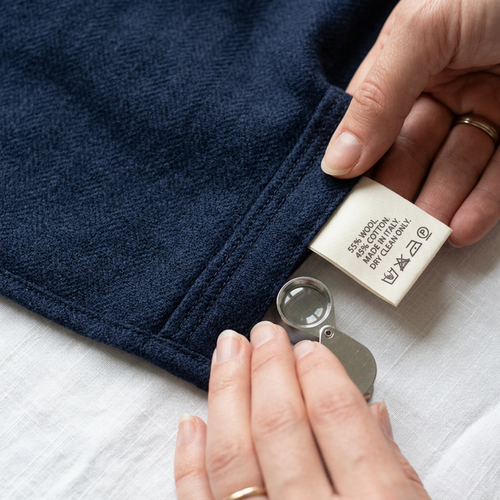
Label and packaging inspection. Authentic branded fashion products follow strict internal quality standards for labeling: font consistency, placement, material composition, care instruction formatting, and barcode validity. Counterfeit products frequently show inconsistencies in one or more of these elements – incorrect font weight, non-standard care symbols, missing EU textile regulation compliance information.
Construction quality examination. Stitching consistency, seam finishing, material weight, and hardware quality (for accessories and footwear) are reliable authenticity indicators for most premium and sportswear brands. Production quality for major labels is tightly controlled; significant inconsistency in construction almost always indicates non-authentic product.
Barcode and serial number verification. Most major brands provide authentication tools – brand-specific apps, retailer portals, or direct verification lines – that allow legitimate business partners to confirm product authenticity by barcode or serial number. Using these tools for any significant purchase from an unfamiliar source is standard practice for professional buyers.
Supplier documentation audit. Legitimate suppliers can provide documentation tracing products from original production or authorized distribution. This includes purchase invoices, packing lists, and for excess stock specifically, documentation of the original brand-distributor or brand-retailer relationship. Any legitimate supplier of branded surplus stock should be able to provide this documentation on request.
The Structural Solution: Verified Sourcing Channels
Individual product authentication is a necessary but insufficient response to counterfeit risk. The more robust approach is ensuring that your wholesale sourcing channels are structurally protected against counterfeit products entering the supply chain.
This is one of the primary value propositions of verified private B2B wholesale platforms operating in the European fashion market. Platforms that require documented business verification from all suppliers – and only onboard suppliers who can demonstrate a legitimate brand or distributor relationship – create a structural check that individual product inspection cannot replicate.
When sourcing through a verified B2B wholesale fashion platform that requires supplier authentication and maintains chain-of-custody documentation, the probabilistic risk of encountering counterfeit product is dramatically lower than sourcing through unverified channels, even before any individual product inspection occurs.
This structural protection matters especially for retailers sourcing premium sportswear and branded fashion categories, where counterfeit product volume is highest and brand enforcement activity is most active.
What Retailers Should Do Practically
Default to verified channels. Any wholesale sourcing channel that does not require verifiable business credentials from suppliers should be treated as higher risk by default. The marginal price advantage offered by unverified sources rarely justifies the counterfeit and legal exposure.
Build supplier documentation habits. For any new supplier – including platforms – request documentation of the supply chain for the first purchase. Legitimate suppliers will provide this readily. Those who cannot or will not are a red flag.
Know your brands’ authentication resources. Most major fashion and sportswear brands provide authentication resources for legitimate retail partners. Know how to access them and use them for any unusual purchase.
Train buying staff on authentication basics. The key authentication indicators – label consistency, construction quality, documentation chain – can be taught to any buying team member. Making authentication a routine part of the receiving procedure removes the reliance on any individual’s expertise.
Report suspicious products promptly. Brand enforcement teams actively pursue counterfeit product removal from the wholesale and retail market. Retailers who discover they may have received counterfeit goods should notify the brand directly – prompt notification generally results in much more favorable outcomes than discovery by enforcement teams.
In a market where counterfeit fashion goods enter the wholesale supply chain through multiple vectors, the most effective protection combines verified sourcing channels with basic authentication discipline. The two approaches are complementary; neither alone is sufficient.